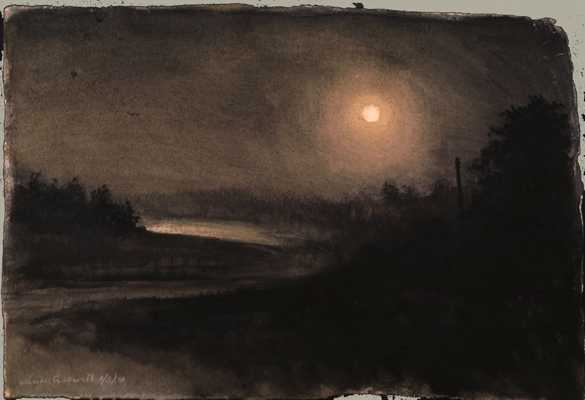
From the vault: Chanting (2001)

Pacific Coast Highway

Pacific Coast Highway

I beat myself up all the time for not writing. Of course, the world is not holding its breath waiting for my pearls of deathless prose, so if I don’t write, who besides me is missing out? The thing is, writing, for me, means communication. I want people to read (or hear) and respond.

The truth is I’ve written plenty, but I haven’t tried to get my stuff published, or even put it out there much on my own. Perfectionism is at work here, as usual. I’ve taken writing courses, in the hopes that I would “improve” enough to feel confident to publish, only to have the teacher tell me my writing was already pretty polished, and to forget about the MFA program. Instead of encouraging me, it scared me, because I already suspected it was true. Another excuse to avoid my dharma was shot out from under me.

How do I know it’s my dharma? Because I’m pretty much useless for anything else. Nothing else holds my attention over the long haul like reading and writing, nothing really satisfies me the same way, nothing else seems to have quite the same effect on my consciousness, and sometimes even on others’.

I’ve noticed over the years (but never considered it to apply to me), that when a person has a good quality, the thing that will trip them up is pride. Pride is the flip side of low self-esteem. I think (and perhaps so do you): if I can’t be seen as perfect (or at least superior), then I will hide my puny light under a bushel and curse the world for being too dark.

I’ve come to realize, after reading Steven Pressfield’s The War of Art, that my Maya, that variety of illusion that is specific to me, manifests itself as Resistance to writing and publishing. Other incarnations of Resistance (Pressfield attributes personality to this malign force) appear as depression, ill health, various addictions (sex, drugs, and alcohol), and the propensity to criticize. Since I’ve been good in the past fifteen years about following the four regulative principles, that leaves the other three, which explains why I’m not always the most fun person to be around.

In short, if we don’t express what’s inside of us in the way which we do (and love) best, we’re violating ourselves. Or as Prabhupada once put it, If you don’t share what you know, it will rot inside of you.

Resistance = Maya.

But what need is there, Tulasi-priya (you might ask) for all this detailed information? Especially about you? Why not just write about Krishna and forget the navel-gazing?

All I can say, to switch metaphorical horses in midstream, is that the garden of my heart is choked with weeds. I uproot them by chanting. I compost them by writing. The same anarthas that starve my bhakti-lata-bija, my tender little sprout of devotion, when purified and churned in the heat of introspection and craft, nourish it. We don’t offer Krishna compost, but we can’t grow fruits and flowers without it.

*            *             *             *

The following little essay was written when I first started the writing class in the summer of 2001. Though everyone in the class knew I was a devotee, I didn’t write about anything about Krishna consciousness at all up to that point, except perhaps in the most indirect way. This exercise was for the teacher’s eyes only. The instructions were to write about something you like to do, or a daily activity, in the most colorful language possible, to really go to town with descriptive words.

I felt a little inhibited at first, but then I thought, what the hell, nobody is going to see it but Valerie. When I finished it, I liked the writing, but didn’t think it seemed the “proper” way to write about chanting. I also feared it might be too narrowly “religious.” Who but a devotee would understand what I was trying to say? For that matter, would even a devotee get it? It’s often hard to break out of conventional ways of speaking about what is sacred, and even harder to get others within your group to understand or accept it.

But to my surprise Valerie liked it very much. I was even more surprised when, the following semester, I asked her what pieces I should try to get published. She told me the “chanting piece” was a good candidate for an online magazine that specializes in short creative non-fiction.

Have you guessed that I never submitted it?

* * * *
Chanting (2001)

I am chanting my japa, chanting Hare Krsna, the names of God. The mala, rosary, passes between my thumb and middle finger, one bead at a time, a steady pulse throbbing in time to the mantras I chant. I chant softly, in a singsong voice. I do this every day, have done it almost every day for the past nine years, the only thing I have done consistently in my life, next to breathing. Not eating not bathing not sleeping not writing—those things can wait, have waited. But not chanting. Each name rides on the breath, a universe the size of a dust speck, like the dust speck world in Horton Hears a Who. Like the universes, millions of them, streaming out of the pores of God like so many tiny air bubbles. Each word contains everything, including myself.

Sometimes I simply go through the motions. I pick up a book or the newspaper, reading, my mouth forming the sounds, the mantra carrying on without me, a river flowing, heedless of all the trash my mind dumps into it. Sometimes I fall asleep, the sound lulling me, like a child who needs a car ride before he drifts off.

I lied. There have been times when I haven’t chanted. The names go underground, buried, hibernating in the cave of my consciousness, like the yogis who bury themselves, entering samadhi, ceasing breathing, eating. Heart rate: one beat per year. Breath rate: once per decade. A living death. But then I hear a call, and I emerge, scraping the mold from my emaciated bones with my eight-inch fingernails and combing earthworms from my hair. Like the yogis, the first thing I want to do is eat. The names are bread and water.

The best times are when I ride the sound, the vibration an idling of a Harley Davidson with the muffler removed. The walls of the house buzz like a hive, the marrow of my bones goes liquid, then vaporizes. I gun the engine once or twice and take off. The destination? The ride is the destination, only the scenery changes, getting better and better, like riding out of the Bronx, across the heartland, through the Grand Canyon, onto the Pacific Coast Highway.

* * * *

If anybody wants to try this exercise for themselves (you’d be surprised at how free it makes you feel), you can write me for the specific instructions that my teacher gave me: tulasipriya [at] gmail [dot] com.

Pacific Coast Highway

Pacific Coast Highway

Share and Enjoy:
  • Digg
  • Sphinn
  • del.icio.us
  • Facebook
  • Mixx
  • Google
  • Reddit
  • StumbleUpon

of slugs and saris

WornIf you haven’t been to see Nicola’s Art Room, hie thee hence and contemplate her elegant, yet simple works, most of them done fairly quickly. Nicola (aka Guruseva dasi) is a dear friend, and an inspiration. She’s also a wife, mother to two rambunctious young boys, and a part-time college student. She’s always got something going on, always going somewhere.

But it’s not for her busy-ness that I so admire her. Her steady enthusiasm for her work, the dailiness (or at least, weekliness) of it, motivate me to be less less consumed, less grandiose, and more relaxed and playful about writing. It’s Guruseva’s perpetual sense of wonder at and deep appreciation of the ordinary that lifts me up and blows me away.

The latest work she posted to her blog is evidence of this. It’s called Worn. Just a simple, small (7″ x 9″) linocut depicting nothing more than some pants and dresses hanging from a clothesline, while clouds float overhead.

I was utterly charmed by this image. Really, is anything more picturesque than the sight of clothes swaying, flapping, and fluttering on the breeze? And the fragrance of sun-dried clothes? Delicious. It reminds me, faintly, of fresh cilantro. Especially beautiful is the vision of colorful saris dancing and billowing like parachutes as they tug against the clothesline.

But there’s more to line-drying than mere esthetics. Eschewing the tumble drier saves electricity and gas, as well as money. If you’ve got a few big loads, it’s a good form of exercise, too.

Even the doyenne of domestic demigoddesses, Martha Stewart, sings the praises of line drying, to the point of offering a DIY project guide to building your own stylish wood-framed clothesline. Martha, however, goes beyond recommending drying your clothes on a line, and alternately suggests spreading your linens, and similar light, large cloth items, on the lawn. As a faithful subscriber to her magazine, I thought this was a charming idea and vowed to try it someday, in the event I ever got sufficient lawn space.

New Vrindaban, West Virginia

I finally got my chance when we moved to New Vrindavan in West Virginia. Summers there are truly “almost Heaven“: sunny, warm, and breezy, perfect for line drying a load of saris on the lawn, especially since clothesline real estate was usually in short supply. I had dried clothes horizontally once before, on the cropped grassy field facing the apartment buildings near the temple. The saris looked so pretty, spread out in the sunshine, resting lightly on the tips of the grass, and were ready for folding within twenty minutes. I carted my basket back to my apartment, basking in my Martha-ness.

Since things seemed to dry so rapidly, I wasn’t too concerned when I got a late start one day and the laundry wasn’t out of the washer until well into the afternoon. Eyeing the sky doubtfully as the sun approached the tops of the West Virginia hills, I thought, there’s still a half-hour of light left, I’ll just put the saris out, and the heavy stuff in the drier. Quickly I laid them out, and went back to my place…

…only to forget about the clothes until the sun had been down for half an hour. I dashed outside to collect my saris, but dew had already settled on them. They were as damp as when I first laid them down on the grass.

I gathered them up, complaining under my breath, resigned to having to hang them over the furniture to finish drying overnight. I brought them into the apartment and pulled one out of the basket to fold.

What I discovered as I lined up the edges of the fabric had never been mentioned in the pages of Martha Stewart Living magazine as even remotely possible. My eyes starting out of my head in horror, I flung the sari away from me as if it were on fire, rather than merely damp.

“AAAAAAHH!!!”

My husband came running out of the bedroom.

“What happened!?”

“Look!”

Picking the sari up again by the edge, with only the remotest tips of my fingers, I showed him: slugs.

Moist, slimy, slugs.

slugtnDozens of them, maybe even hundreds, congregating on one side of the sari, the side that had touch the grass, silently enjoying the cool dew that had soaked the cloth, oblivious to the turmoil they were now causing.

“Oh, my God!” cried my husband, “What are you going to do?”

We,” I informed him with a level stare, “are going to pick them off.”

“I’m not picking slugs off a sari. Throw it away.”

I checked to see if any other saris were infested, then looked at my husband again. “Okay, I’ll throw them away. Then you can buy me more saris.”

“They’re all covered in slugs?”

“That’s right.”

He sighed, deeply, heavily, in defeat. “I have no idea how to deal with this.”

That made two of us.

We briefly considered sprinkling the slugs with salt to make them fall off, the way Humphrey Bogart did to their cousin leeches in The African Queen, but dismissed the idea as too cruel. After all, the slugs weren’t sucking our blood, merely having a moist chill-out. It was not their fault they were stuck on the saris, but mine. But who knew that leaving them out on the grass after sundown for a few minutes would lead to this?

We awkwardly tried to peel their mucous-y bodies off the fabric, only to be confronted with a complication: the slugs were drying out. The indoor air, devoid of the dew which was precipitating on the lawn outdoors, was slowly drying out the saris, and with them, desiccating the slugs as wells. My sense of urgency was now growing into panic. I didn’t want to be guilty of slug-slaughter, but even more important, I knew that once the slugs dried out completely and died, there would be no getting them off my saris, ever. This was no longer a mere domestic debacle, but a life-or-death race against the clock.

After a few minutes of futile picking at the slugs (to the accompaniment of “icks,” and “ewws.”), then wondering what to do with the slugs once they were off the fabric, we were tempted to give up on both the saris and the slugs.

By this point I was feeling a kind of existential depression. There were so many slugs, whole families of them, in an infinity of sizes, just doing what God designed them to do, namely, hanging out in a moist environment. Some of the slugs were just tiny babies, no bigger than the letter “i” in the title of this blog post. It seemed so senseless for a living entity to take birth as a slug, only to have its already brief life shortened even quicker. I looked back, with a pang, on all the escargot I’d eaten in my life .

But there was no time to waste wallowing in guilt. Racking our brains, we chanted Hare Krishna to the doomed slugs. Maybe I was becoming sentimentally attached, but I couldn’t let it go at that. Even if they didn’t have a clue that they were about to die, they all deserved a chance at completing their full lifespan as slugs. And they’d get that chance, if I had anything to say about it.

Krishna! We finally hit on a solution that would speed the picking while saving the slugs from death (and my saris from destruction). Reasoning that increased moisture would thin out the viscosity of their slime, we spritzed the slugs with water from a spray bottle, and as they rehydrated, quickly plucked them off and dropped them into a cup containing a small amount of water. After accumulating a dozen slugs in the cup, we then flung the contents into the yard, leaving them to their natural fate.

It worked! Spritz, pick, fling, repeat. And so on, for the next hour.

My husband: spritzing and flinging.

Yours truly: picking.

Both of us chanting: Hare Krishna Hare Krishna, Krishna Krishna Hare Hare, Hare Rama Hare Rama, Rama Rama Hare Hare.

It seemed like there was no end to the slugs, but we kept it up until the last one was flung. I was both glad and sorry to see them gone. I had gotten over my disgust, and now saw them as simply the other side of the equation. They were causing me problems, and I was causing them a problem, try as I might to fix it. Once I made up my mind to save them, they were my sole focus, and dwelling on my disgust for their bodies was not helping any of us.

Looking back, that wacky situation only proved the point that, whatever or whomever we choose to serve, we develop attachment to. I certainly didn’t want the slugs back (it wasn’t a very deep attachment), but I was now concerned with what might happen to them out in the dark.

What entanglement! And for mere slugs. If only I could be that concerned for my own consciousness, doing whatever was necessary with a sense of urgency to ensure that, spiritually, I don’t dry out. Have I ever served Krishna with the same intensity as I served those slugs? I honestly don’t remember, which alone says something. I remember the slugs, though.

Accuse me of over-dramatizing, but I can say with all honesty that I felt no sense of boredom or resentment during the slug-fling, only the consciousness of doing what needed to be done and of feeling myself absolutely essential to the doing of it. Too often, I’ve thought that whatever service I’ve done for Krishna could just as easily have been done by someone else.

Does my service matter to Krishna if it doesn’t matter to me?

Even if our service can be done be someone else, we owe it to Krishna and to ourselves to do it in such a way that we become indispensable, as if somebody’s life depended on it, especially our own. It does.

And so, with the slugs back in the grass where they belonged (hopefully in a more spiritually advanced state than when I first discovered them), my saris were saved (and washed three times before I’d wear them again), and my husband and I had a new shared memory (although he didn’t care to remember it), along with a newly-coined phrase that we use whenever we want to elegantly sum up the annoyances of the householder existence:

“It’s just another slug on the sari of life.”
429514093_8e966b8af2

If anyone reading this has ever remotely had anything like this happen to you, I’d love to hear about it.

Share and Enjoy:
  • Digg
  • Sphinn
  • del.icio.us
  • Facebook
  • Mixx
  • Google
  • Reddit
  • StumbleUpon

Staring down the barrel of Maya-devi’s gun

46763232_6633c21edc1

http://www.flickr.com/photos/screamingam/ / CC BY-NC-SA 2.0

If I were still caught in my usual low-grade mental illness, I’d be feeling very ashamed about this situation, further evidence that I’ve not lived up to my “potential.” Oddly enough, I’m not, even though a part of me thinks I should be. I’ve come to realize that this kind of mental assault—in the forms of fear, regret, shame, etc., etc., etc.—that replays itself over and over, long after the behavior that triggered them is over, is simply another bullet in the arsenal of the illusory energy, Maya-devi.

At the risk of sounding like a fundamentalist Hare Krishna, I’ll say it: she’s got me in her sights. I’m staring down the barrel of her cocked revolver. Inscribed on the bullet is a single word: Loser.

This is not necessarily the truth. At least, it doesn’t have to be. You’re only a loser when you stop trying, isn’t that what they say? Like Neo in the Matrix, I can choose to see that this is only an illusion of the mind, and pluck that bullet out of thin air, before it embeds itself in me forever. I may be over the hill materially, but I no longer subscribe to a material point of view.

It’s not everyday that you can recognize that you’re being tested. That’s what my friend’s request feels like, a test. At first I thought it was a threat, because I forgot that the original idea behind the Eastern Side blog was given to me first. I forgot that I had at least some faith, foresight, and initiative to buy the damned domain name, to waste invest money for hosting I’ve hardly used.

So I did do something. It just wasn’t enough.

Not yet.

To shift gears and go back to my original analogy, it’s like I had a baby but no place to raise it. Now, Child Protection Services, in the form of this perceived threat, is up in my grill, saying, you can’t raise this kid in a stolen grocery cart. Give him a home, or we’re putting him in foster care. It’s really an opportunity to clean up my act.

So, I’m not going to merely hand over my blog name because somebody asked me. There’s no guarantee he would grow it the way I would if I gave it my best effort. Everybody, unless they’re outright abusive or severely neglectful, has the right to raise their own child. You don’t have to be rich, a genius, or (completely) emotionally stable to be a parent, if I’m to judge by the way my friends parent their kids.

(I’m joking, people.)

Your child simply has to be yours.

My problem has been the thought that I have to be worthy of my vision before I even start to develop it. That I have to be brilliant, have perfect sadhana, the laundry done, lose thirty pounds first, etc. Most of all, I thought that I’d have to feel confident about it. That I would have to become the kind of person who would have such a brilliant idea before I actually do anything.

But like I said before, the ideas don’t come from me, they come from Krishna. I simply have to become the instrument, nimitta-matram. I’ve been trying so hard to control the outcome in my mind before even beginning, that there’s been no outcome at all. It’s like digging up a seed to see if it’s sprouted, or stretching a child to make her grow. It’s perverse. It’s not humble. It’s actually more humble to put yourself out there, feeling unqualified, than to think you have the world by the tail. So I’m trying to be humble, see: “Read my blog!”

Unlike with real children, you can mold or stretch a project to fit your vision. But then, like what does happen with a real child, your brainchild  forces you to grow in ways you can’t foresee. I can’t afford to deny myself that opportunity, just because somebody else might be more qualified. I’ve thrown away too many chances already. And besides, it’s still my baby.

And so I will face this test on my own terms: I’m giving myself a month to make this blog a home for my brainchild. A thousand words a day, give or take a couple hundred. But more than that, I want to make a family for my brainchild. I believe extended families are good for kids, so I’m going to try to attract readers by writing about stuff that will inspire them to read and comment, which will further inspire me.

If I can’t pull it off, then I’ll let my friend have the name of this blog. Because every child deserves a proper home.

Unlike how it was in high school, it’s not cheating if you help me ace this test. A few good friends wrote to encourage me, which was profoundly….well, encouraging! Thank you.

If you’re so inspired and you didn’t already do this yesterday, you can share your own struggle(s) of how you let an opportunity slip away, faced a test, or turned a failure around in the comments below, or send me an email.

Hare Krishna.

Photo by Screamin A-M under Creative Commons License:
Share and Enjoy:
  • Digg
  • Sphinn
  • del.icio.us
  • Facebook
  • Mixx
  • Google
  • Reddit
  • StumbleUpon

Use it or lose it

"Borrowed" from HauntedXing.com

Brainchild, "borrowed" from HauntedXing.com

I’ve been confronted with the fact that I’m a negligent mother.

No, I don’t have kids, I’m talking about criminal neglect of a brainchild.

This morning, when I should have been chanting my japa, I was checking my email. What I read there made my blood chill a degree or two, made my stomach muscles stiffen like they’d taken a punch.

Someone asked me if they could have my blog name, my blog name, for their blog.

Ordinarily, I might laugh this off and tell the person to go to hell, if only in my mind. After all, a blog name is sacred, isn’t it? It’s part of a person’s online identity, right? It’s your online presence, no? Especially when you’ve spent money on the actual domain name and a year’s worth of hosting?

The problem is, the person who asked me for my unique, inimitable, profound, evocative blog name is a dear, dear friend (although I haven’t heard from him in months, until he wants something from me), a person who has been very kind to me, who once did a very wonderful thing for me: he got me a job.

It wasn’t his fault the job didn’t work out.

He also lent me money once. A decent chunk of change, though the exact amount escapes my memory right now.

But I paid him back, so he can still go to hell. Blog names are worth more than money. I’m starting to think they’re worth more than friendship.

But wait. Not so fast. This is the reason he wants The Eastern Side:

Preaching—big preaching. The kind of big preaching I’d have the right to aspire to, if only I weren’t such a miserly ass about my own blogging. If only I weren’t such a perfectionist about writing, if only my false ego weren’t so very false, so puffy-huge, like an over-proofed dough-ball, ready to collapse at the first poke.

I admit it, I was flattered to be asked. It is an awesome blog name. At the same time, I thought, where does this guy get off?

Where he gets off is, “You’re not making the most of an awesome blog name, can I make it fly?”

This is the story of my life. The story of my “wasted potential.”

All my life, I’ve been told things like:

  • You could be at the top of your class . . .
  • What are you doing working in this restaurant . . . ?
  • You have so much potential . . .
  • . . . if only you’d apply yourself!

    And most recently (though not to my face), this:

    She’s a nice girl, but don’t expect too much from her.

    Ow.

    The pain.

    Actually, it hasn’t been all my life that I got this sort of thing, only until high school. Once you reach a certain age, it’s no longer “potential,” but “wasted potential,” at least from the material point of view.

    I’m well past that age, from the material point of view.

    So I felt threatened. Like somehow this—ahem—friend has a right to take something from me (even though he did ask nicely), that I should just fork it over because he’s bigger and stronger (in the sense of having more of an audience, more credibility), and better connected, and more diligent about blogging (though, like me, he hardly ever updated his current blog either). It’s like this blog name of mine, the very idea behind it, isn’t really mine.

    But it isn’t mine, not really, no matter how much I’ve paid for GoDaddy and hosting.

    Nobody owns an idea, it’s only on loan from Krishna. You can’t even copyright an idea, that’s how free they are.

    Like they say about sex and money: use it or lose it.

    If you don’t cultivate what you’re given, somebody else will come along and do it. All your hopes, those tender plants you nourish and water with your one-of-these-days and get-around-to-its and wouldn’t-it-be-awesome-ifs turn out to be nothing more than unsightly weeds, choking out the ideas and dreams you planted as tiny seeds. A child who is neglected becomes stunted and deformed.

    Meanwhile, somebody else has cultivated a garden elsewhere and is harvesting fragrant roses and juicy tomatoes. You look wistfully from your patch of thistles and say, “That’s what I thought of, I had that idea, but he beat me to it.”

    * * * *

    Tomorrow:  “Staring Down the Barrel of Maya-Devi’s Gun”

    And if you’re so inspired, you can share (in the Comments section) your own struggle(s) of how you let an opportunity slip away, faced a test, or turned a failure in to triumph.

    Or send me an email. It would inspire me to hear about how you deal/have dealt with this problem.

    Hare Krishna.

Share and Enjoy:
  • Digg
  • Sphinn
  • del.icio.us
  • Facebook
  • Mixx
  • Google
  • Reddit
  • StumbleUpon